Beyond Need: Re-imagining How We See Immigrant Women
Settlement services ask what immigrant women need. This piece asks the question we skip: what do they already bring; and what could we build together?
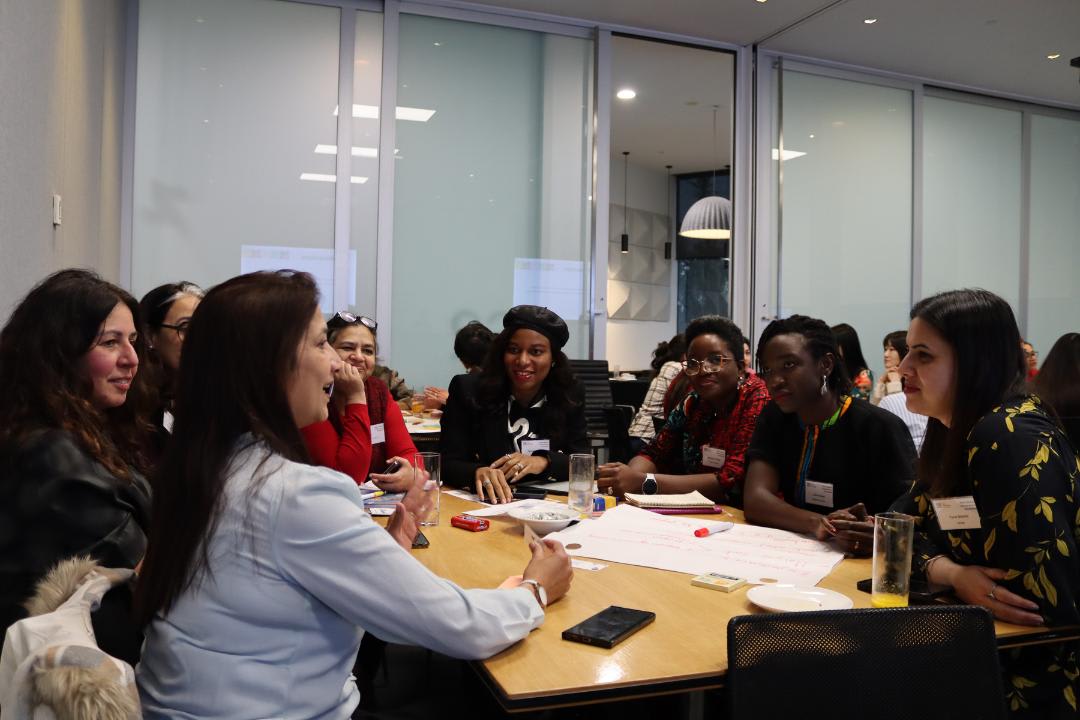
What if we stopped asking only what immigrant women need and started asking what they already have to offer?
When we talk about immigrant women, the conversation often begins with a familiar question:
What do immigrant women need?
The answers are important.
They need access to employment.
They need language support.
They need mentorship and professional networks.
They may need help navigating healthcare, housing, education and government systems.
They may need childcare, community connections, financial support or help understanding life in a new country.
Canada has built an extensive settlement infrastructure around many of these needs.
And it matters.
In 2024, 694,640 unique clients received services through Canada's federally funded Settlement Program. Of the clients for whom gender data was available, 55% identified as women. Women also represented the majority of clients accessing several specific services, including language training, language assessment, community connection and employment-related services.
The need is real.
But there is another question we don't ask nearly as often.
What do immigrant women already bring with them?
The problem with seeing someone primarily through need
There is nothing inherently wrong with asking what someone needs.
The problem begins when need becomes the primary lens through which we see them.
When the conversation about immigrant women is dominated by employment barriers, language barriers, credential recognition, settlement challenges and social isolation, it can unintentionally create a picture of women defined primarily by what is missing.
A woman becomes:
A newcomer who needs a job.
A mother who needs childcare.
A professional who needs Canadian experience.
A person who needs language training.
A newcomer who needs to integrate.
All of these things may be true.
But none of them tells us the whole story.
Because she may also be:
A teacher.
An engineer.
A nurse.
A researcher.
A business owner.
A caregiver.
A community organizer.
A multilingual communicator.
A mentor.
A mother raising children across cultures.
A person who has built relationships across continents.
A woman who has already navigated one enormous transition and learned how to rebuild.
She may have knowledge that no settlement program can give her.
And she may have ideas that the institutions supporting her have never considered.
The question is not whether immigrant women need support.
They do.
The question is whether support should be the only story we tell about them.
What the data tells us and what it doesn't
Consider education.
Canadian data has repeatedly shown that immigrant women are highly educated. Recent immigrant women have, in fact, had higher rates of university education than Canadian-born women in several periods and age groups. In 2019–2021, about half of recent immigrant women aged 20 to 54 had a bachelor's degree or higher, compared with 36% of Canadian-born women.
Yet education does not always translate into employment that reflects that education.
Statistics Canada's 2026 analysis found that recent immigrants with postsecondary education had substantially higher rates of job mismatch than people born in Canada. Among recent immigrants with a bachelor's degree, 30.3% were overqualified for their jobs, compared with 20.2% of those born in Canada. Among recent immigrants with education above a bachelor's degree, the figures were 33.8% and 19.9%, respectively.
The numbers tell us something important:
There is a gap between what many immigrant women know and what the labour market recognizes.
But the numbers alone don't tell us what it feels like to spend years rebuilding a professional identity.
They don't tell us what it means to arrive with years of experience and be told that it doesn't count.
They don't tell us about the woman who accepts a job far below her qualifications because her family needs an income.
They don't tell us about the professional who stops applying after hundreds of rejections.
They don't tell us about the business idea that never gets pursued because there was no network to help develop it.
Statistics can identify a pattern.
Stories help us understand the human experience inside that pattern.
Immigrant women are not only recipients of support
Canada's settlement system exists for a reason.
In 2024–25, more than 692,000 clients accessed settlement and resettlement services. The federal Settlement Program provides support including information and orientation, language training, employment-related services and community connections. Targeted programming also exists for groups facing additional barriers, including women.
These services can be essential.
But there is an important distinction between saying:
“Immigrant women need support.”
and saying:
“Immigrant women are people who need support.”
The first describes a circumstance.
The second can become an identity.
And when we reduce people to their needs, we can overlook their agency.
We can overlook their capacity to contribute.
We can overlook their knowledge.
We can overlook the possibility that they are not only users of systems but potential partners in improving them.
What does an immigrant woman bring to the table?
She may bring professional knowledge developed over years or decades.
She may bring cultural knowledge that helps organizations understand communities they struggle to reach.
She may bring language skills that allow her to move between communities.
She may bring international networks that connect people, markets and ideas across borders.
She may bring entrepreneurial experience.
She may bring lived experience of navigating systems that institutions are trying to improve.
She may bring adaptability.
She may bring resourcefulness.
She may bring leadership.
She may bring a different way of solving a problem.
She may bring an understanding of what it means to start again.
And sometimes, she may bring something even more valuable:
a question that nobody else thought to ask.
Immigrant entrepreneurship is one example
Immigrant contributions are not theoretical.
Statistics Canada reported that in the first quarter of 2024, approximately 23.7% of private-sector businesses in Canada were majority-owned by immigrants roughly corresponding to the immigrant share of the population.
Research on immigrant entrepreneurship has also found that immigrants have historically had higher business ownership and self-employment rates than Canadian-born populations.
But there is an important gender dimension.
Immigrant men have been found to be substantially more likely than immigrant women to own businesses.
That statistic raises another question:
What might become possible if more immigrant women had access to the capital, networks, mentorship and opportunities necessary to turn their ideas into businesses?
Again, the conversation cannot stop at:
“What support do immigrant women need?”
We should also ask:
“What could immigrant women build if the right conditions existed?”
From beneficiaries to partners
Perhaps the most important shift is not from “need” to “contribution.”
It is from beneficiary to partner.
Imagine an organization developing a program for immigrant women.
The traditional process might look something like this:
1. Identify a problem.
2. Research the population.
3. Design a program.
4. Deliver the program.
5. Measure outcomes.
But what if immigrant women were involved earlier?
What if we asked them:
What are you experiencing?
What are we missing?
What would actually help?
What have you tried already?
What would you design differently?
What do you know that we don't?
That is more than consultation.
It moves toward co-creation.
Because the person experiencing a problem may also possess knowledge about the problem that an institution cannot obtain from a report alone.
We should listen without extracting
There is another reason this matters.
Storytelling has become increasingly popular in social-impact work.
Organizations ask people to share their stories.
Campaigns feature personal narratives.
Funders want impact stories.
Programs collect testimonials.
But there is a question we should ask:
Who benefits when someone tells their story?
If an immigrant woman shares a painful experience, does she gain something from telling it?
Does the organization learn something?
Does the story influence a program or policy?
Does the community become more informed?
Or is her story simply being used to demonstrate that a program worked?
There is a difference between storytelling and extraction.
Giving someone a microphone is not automatically empowerment.
Sometimes empowerment means creating the conditions for someone to decide:
What do I want to tell?
How do I want to tell it?
Who gets to hear it?
What happens after I tell it?
What will my story contribute to?
This is why ethical storytelling matters.
A story is more than an emotional moment
At Her Immigrant Tales, we believe stories can do more than make us feel something.
Stories can connect people.
They can create belonging.
They can preserve memory.
They can challenge assumptions.
They can reveal patterns.
And when stories are collected and listened to collectively, they can become a source of community knowledge.
Imagine hearing from hundreds of immigrant women about their experiences with employment.
Or childcare.
Or healthcare.
Or entrepreneurship.
Or friendship.
Or motherhood.
Or belonging.
One story can move us.
A hundred stories can reveal a pattern.
And patterns can lead us to better questions.
Better questions can lead to better programs.
And better programs can contribute to better systems.
That is where storytelling can become social infrastructure.*m
So what should we ask immigrant women?
Perhaps we should keep asking:
What do you need?
But we should add:
What do you know?
What have you learned?
What have you built?
What do you bring with you?
What can you contribute?
What would you change?
What have we misunderstood?
What should we be paying attention to?
What would you build if you had the opportunity?
What can we build together?
These questions don't replace support.
They expand the conversation.
Beyond the label “immigrant”
There is another reason this matters.
Immigration is an event.
It can be transformative, disruptive, painful, exciting, liberating, difficult or all of these things at once.
But an immigrant woman is not simply her immigration journey.
She is not only the country she left.
She is not only the country she entered.
She is not only her visa, her job, her accent, her credentials, her children or her settlement experience.
She is a whole person.
She has a past.
A present.
A future.
Dreams.
Contradictions.
Talents.
Failures.
Relationships.
Ambitions.
Knowledge.
And stories that may have nothing to do with immigration at all.
That is why one of the questions we ask at Her Immigrant Tales is:
Who are you beyond your immigration journey?
Because sometimes the most important story begins after the immigration story ends.
What if we changed the question?
Maybe the future of immigrant inclusion isn't simply about building better services for immigrant women.
Maybe it is also about building better relationships with immigrant women.
Not simply:
“How can we help you?”
But:
“What can we learn from you?”
Not simply:
“What barriers are you facing?”
But:
“What knowledge have those experiences given you?”
Not simply:
“How do we integrate you into our community?”
But:
“How might you help shape the community we're becoming?”
And not simply:
“How can we give immigrant women a voice?”
But:
“Are we prepared to listen when they use it?”
We came with something worth putting on the table
Immigrant women don't arrive empty-handed.
They arrive with knowledge.
With experiences.
With languages.
With relationships.
With cultures.
With businesses.
With ideas.
With memories.
With questions.
With dreams.
With an understanding of starting again.
And with the capacity to contribute to the communities they now call home.
So yes:
Support immigrant women.
But don't reduce them to what they need.
See what they know.
Hear what they have learned.
Recognize what they have built.
Make room for what they can contribute.
And when they sit down at the table, don't ask only what you can put in front of them.
Ask what they brought with them.
Because they may have brought something we didn't know we needed.
About Her Immigrant Tales
Her Immigrant Tales is a storytelling and community initiative focused on immigrant women's experiences, voices and contributions.
We create spaces for immigrant women to share their stories, build connections and be seen beyond the labels often placed on them.
We believe stories can do more than tell us where someone has been.
They can help us understand what she knows, what she brings, what she is building and what becomes possible when we listen.
See us. Hear us. Then let's build something together.
Her Immigrant Tales