
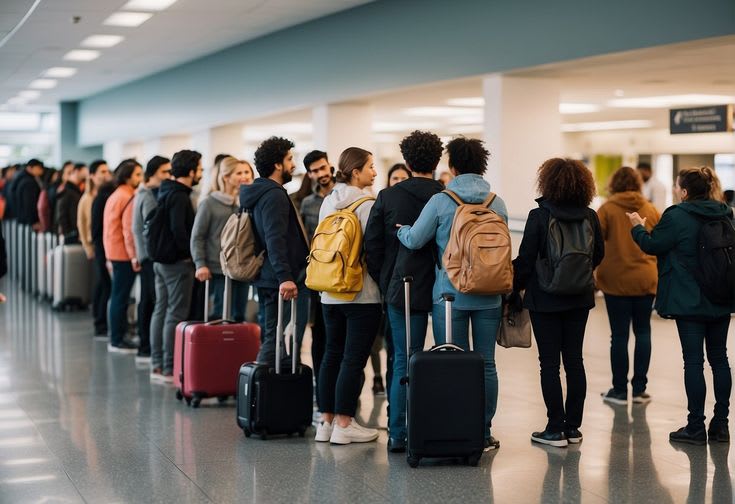
Are there more male or female immigrants is a question that reveals how migration shapes our world today. According to a report by the World Bank, remittance flow reached $656 billion in 2023, demonstrating the sheer scale of global mobility. At the same time, the International Organization for Migration (IOM) reports that gender differences in migration are narrowing as more women pursue education, work, and safety abroad.
Have you asked yourself why some regions have predominantly male migrants while others see women in nearly equal numbers? Or how family reunification, labor demand, and humanitarian crises shape who moves and who stays? These questions reflect the complexity of global migration, and understanding them is key to supporting immigrant communities effectively. At Her Immigrant Tales, we celebrate these journeys, sharing stories of immigrant women who thrive despite cultural, financial, and legal challenges.
In this article, we explore the reasons behind gender differences in migration, and the regions where male and female migration dominate. By the end, you’ll see why migration isn’t just about numbers, it’s about human resilience. So, read on!
Are There More Male or Female Immigrants?
Globally, when people ask if there are more male or female immigrants, the data shows a slight male majority, but the gap is small. According to the UN DESA, there were about 281 million international migrants worldwide as of 2024, with men accounting for roughly 52% and women about 48%. This balance has remained relatively stable over the past decade. Although the male share has increased slightly due to labor-driven migration.
In 2000, women made up nearly half of all international migrants (around 49%), showing that global migration has long been close to gender parity rather than overwhelmingly male or female. However, these global figures hide major regional differences. In Europe and North America, women represent around half or slightly more than half of immigrant populations, largely because of family reunification, education, and professional migration.
By contrast, regions such as Northern Africa and Western Asia have a much higher proportion of male migrants, driven by large-scale recruitment of men for construction, energy, and service-sector jobs. Meanwhile, in humanitarian and refugee contexts, women and children often form a significant share of displaced populations.
Which Regions and Countries Host the Largest Numbers Of Migrants?
Generally, Europe and Northern America host the largest numbers of international migrants. According to the 2024 report by the UN, Europe is home to about 94 million migrants, while Northern America, led by the United States, hosts around 61 million. These regions attract people due to strong economies, educational opportunities, and family reunification programs. Meanwhile, Northern Africa and Western Asia have around 54 million migrants, largely driven by labor demand in construction, energy, and services.
At the country level, the United States tops the list with approximately 52.4 million migrants, followed by Germany (16.8 million), Saudi Arabia (13.7 million), and the United Kingdom (11.8 million). Other top destinations include France, Spain, Canada, UAE, Australia, and Russia, collectively hosting a significant share of the world’s migrant population. When analyzing these numbers, a common question arises: are there more male or female immigrants? Globally, men slightly outnumber women, with just a mild difference.
Reasons for Male Migration
When people ask if there are more male or female immigrants, understanding why men migrate helps explain the numbers. Globally, male migration has historically been driven by economic demand and labor mobility, especially in regions that rely on physically demanding or temporary work. Common reasons for male migration include:
- Employment opportunities: Men often migrate for jobs in construction, manufacturing, agriculture, oil and gas, and transportation, especially where labor shortages exist.
- Higher earning potential: Migration allows men to earn wages that can support families back home through remittances.
- Temporary or contract work: Many men migrate alone on short-term or circular labor contracts, particularly in the Gulf states and parts of Asia.
- Economic instability at home: Unemployment, inflation, or lack of opportunity pushes men to seek work abroad.
- Education and skills acquisition: Some men migrate to gain technical skills or higher education that can improve long-term income prospects.
Reasons for Female Migration
Typically, female migration has increased steadily over the past few decades, with women now migrating not just as dependents, but as primary decision-makers, professionals, and caregivers shaping global movement. Some of these reasons include:
- Family reunification: Many women migrate to join spouses, children, or relatives already living abroad.
- Care and service-sector jobs: Women often move for work in healthcare, domestic work, childcare, hospitality, and elder care.
- Education and career growth: More women now migrate independently for university education and professional advancement.
- Escaping insecurity or violence: Some women migrate to flee conflict, gender-based violence, forced marriage, or discrimination.
- Seeking independence and stability: Migration can offer women greater personal freedom, financial control, and long-term security.
Why Are There Differences in Male and Female Immigration Rates?
The differences in male and female immigration rates exist because men and women often migrate for different reasons, under different conditions, and through different pathways. These gaps are shaped by economics, culture, policy, and safety, and they vary widely by region and time. Below are key reasons.
#1. Labor Market Demand and Job Opportunities
One of the strongest drivers of gender differences in migration is global labor demand. Just like we earlier stated, many countries recruit foreign workers for sectors like construction, agriculture, mining, and manufacturing industries that traditionally employ more men. As a result, men are more likely to migrate alone for work, often on temporary or contract-based visas. This pattern is especially visible in regions like the Gulf States and parts of Asia, where male labor migration dominates.
#2. Immigration Policies and Visa Pathways
Immigration systems significantly influence who migrates. Employment-based visa programs often favor occupations with higher male participation, which increases male migration rates. On the other hand, women are more likely to migrate through family reunification visas, joining spouses or relatives after the initial move. Hence, when family visas are limited or delayed, female migration numbers tend to lag behind.
#3. Cultural and Social Norms
In many societies, gender roles shape migration decisions. Men are often expected to migrate first as financial providers, while women remain behind to care for children, elders, or households. These norms reduce women’s mobility in certain regions. However, in countries with higher gender equality, women increasingly migrate independently for education, careers, and entrepreneurship. This leads to more balanced migration rates.
#4. Safety, Risk, and Vulnerability
Migration can be more dangerous for women due to higher risks of exploitation, trafficking, and gender-based violence during transit or employment abroad. These risks can discourage independent female migration or restrict women to safer, more regulated pathways. At the same time, in humanitarian crises, women and children often make up a large share of displaced populations, which shifts gender patterns in refugee migration.
#5. Education and Professional Mobility Trends
Over time, education-driven migration has narrowed the gender gap. Today, more women now migrate for higher education, healthcare roles, technology, and professional careers. This shift explains why many developed countries now have nearly equal, or even higher numbers of female immigrants compared to men.